Why top high school athletes should choose HBCUs over PWIs
What’s the first word that comes to mind when you hear these colleges: Duke, Clemson, LSU, Alabama, and Ohio State. Raise your hand if sports comes to mind. Now raise your hand if PWI comes to mind. Majority of high school athletes, who happen to be mostly black, go on to play college sports at PWIs. Why is that? Better funding, greater programs, the name. While they continue to grow, where does that leave HBCUs? If you’re good enough, the outlets like ESPN and Overtime will follow you. There’s also been elite and Hall of Fame professional talent that’s played at HBCUs and with the new name, image, and likeness deals, also known as NIL deals, players can help generate revenue for the area. I’m here to talk about how high school athletes can get the same or similar benefits from HBCUs.

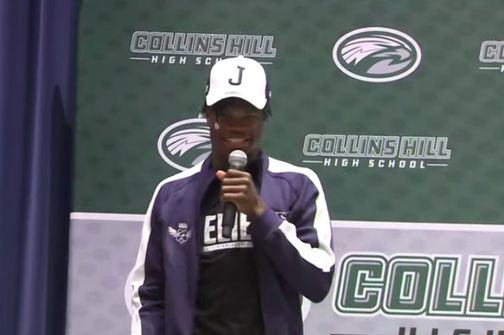
One main reason why high school athletes go to PWIs over HBCUs is exposure. The famous college sports powerhouses like the ones listed above are all PWIs who are constantly in the playoffs and winning. These colleges always attract the top players because they want to play for the top schools like other elite athletes before them. According to Jessica R. Key of the Indianapolis Recorder, most HBCUs don’t have the budget to compete at the higher levels and are thus relegated to Division II athletics. While playing at a Division I college makes for better exposure, top recruits forget this tip: the outlets will follow you wherever you are. In the age of social media, news outlets like ESPN and Overtime are looking for prospects to cover and even follow those with a bigger following. LaMelo Ball for example played overseas instead of the NCAA. Ball states that he didn’t regret his choice and it paid off as he was still in the spotlight and went on to be the third overall pick in the 2020 NBA draft class and even won rookie of the year. Another player that drew heads is 5 star recruit Mikey Williams. The 16th ranked prospect in the 2023 class mentioned that he’s leaning towards playing at an HBCU in the future. Chapel Fowler of the Fayetteville Observer details that Mikey has decided to wait and see how other avenues provide payment like the Overtime Elite league, the NBA G-League Ignite team, and even college with the new NIL deals. With his social media following, he could have ESPN covering games at Hampton, Howard, or North Carolina A&T just to name a few. While Mikey is considering an HBCU, we’ve already seen a top recruit commit to one. NFL Hall of Famer Deion Sanders became the coach at Jackson State University and led the team to a 10-1 record in the SWAC conference, a SWAC championship, and a bowl game appearance. ESPN started to cover the school’s games and they started to move into the national spotlight. With Sanders being the coach, it lured other star high schoolers to the university. Travis Hunter, the number one football recruit, committed to Jackson State over Florida State and it shocked the nation. According to Tom VanHaaren of ESPN, Hunter is the highest recruit to commit to a FCS school, which is a lower ranking school. With this exposure and level of spotlight, other HBCUs can benefit from this and start to get higher ranking recruits.

We’ve considered the future of HBCU athletes but what about the past? While it’s been a lack of HBCU athletes, there has still been elite professional talent that came from these schools. According to Rod Walker of the New Orleans Advocate, the NFL Hall of Fame has 33 players that attended HBCUs, which makes up almost 10% of the Hall of Fame. With guys in the future like Travis Hunter of Jackson State, that number only looks to grow. Although he is not a Hall of Famer, former Washington quarterback Doug Williams created a noticeable impact on the HBCU to NFL pipeline. Doug Williams attended Grambling State and became the first black quarterback to be drafted in the first round. Wajih AlBaroudi of CBS details how he was also the first black quarterback to start in and win a Super Bowl as he did so against the Denver Broncos in 1988. He led the team to a 42-10 rout over John Elway and his Broncos as he went 18 of 29 in completions, threw for 340 yards, and 4 touchdowns en route to win Super Bowl MVP. Switching gears, 3 NBA players made their mark as HBCU products. Herbert L. White of The Charlotte Post mentions that this year’s NBA 75th anniversary team has 3 HBCU members on it in Sam Jones, Earl Monroe, and Willis Reed. All three were also on the 50th anniversary team and are all Hall of Famers. All 3 combine for 13 NBA championships, with Jones winning 10 of them. While these noticeable names may not have been to the top schools like North Carolina or Georgia, they still left a lasting impact on the game.

While these players might’ve been talented and marketable in college, they didn’t make any money in college. Players have that freedom now with the new NIL laws in place and can use these new rules to generate revenue in the city and profit from there name. In the ESPN 30 for 30 documentary “Vick,” it discusses how Michael Vick led Virginia Tech to the Sugar Bowl Championship game and the school received $11 million for their appearance. Vick’s mother mentions how before the appearance the concession food was your basic burgers, hot dogs, and coke. After the appearance, the school afforded turkey legs, cotton candy, and snoballs as she said it was like Mardi Gras in Blacksburg. The success of Virginia Tech at the time led to fans spending more money at bars and restaurants, especially for away games. While the city and school profited, Vick didn’t see a single dime. All of that has now changed as players can now get paid and sign brand deals without the NCAA getting in the way. Alex Scarborough of ESPN mentioned that before this past college season, Alabama quarterback Bryce Young had amassed over $800,000 in NIL deals and had future deals worth up to $1 million, all before he played a single snap. But what about HBCUs? Well Howard University became the first basketball team to sign an NIL deal as they signed with College H.U.N.K.S. Hauling Junk in December of 2021. Grambling State also signed a unique NIL deal that would pay their student-athletes annually. With the deals already in place and this just being the tip of the iceberg, HBCUs can gain more funding from deals and get better programs like the PWIs.
Considering everything that was mentioned between the exposure, past talent, and new NIL deals, is it really better to play sports at a PWI than an HBCU? ESPN will follow coverage of Jackson State’s Travis Hunter and that’s only going to attract other star players in the future. You already have players like Mikey Williams considering and that made buzz so imagine the next kid after him. With college athletes being able to make profit and the ever growing landscape of social media, HBCU sports will grow and will be here for a long time. My message to the young athletes considering which college to play at: why not an HBCU? Make history while you can before it’s too late.


Comments